
They have transformed their military service challenges into musical motivation.
Their comeback will significantly impact global idol culture beyond just an event.
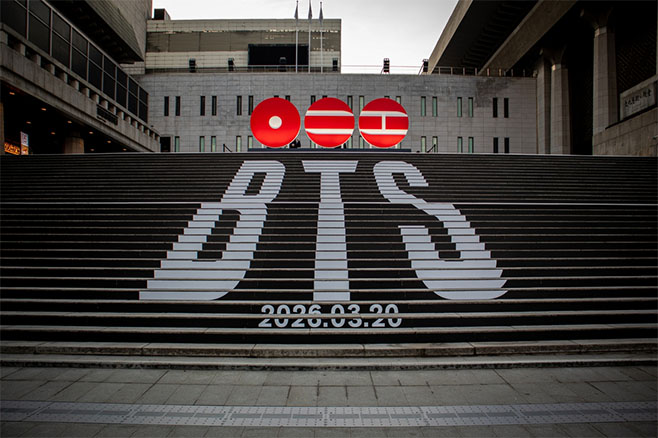
The name of BTS has been inscribed at the Sejong Center in Seoul as part of an offline promotion celebrating the upcoming release of their fifth studio album on March 20. Big Hit Music has engraved the group's name and the release date on the central staircase, topped with an artistic representation of the new album logo. This promotion will take place not only in Seoul but also in major cities worldwide, including New York, Tokyo, and London.
The full group return of BTS generates immense anticipation and excitement, not just among the members and their agency but also across their global fanbase. Since their debut in 2013, BTS has redefined the idol group norm that focused on performance, expressing their unique values and worldview through music and firmly establishing themselves as a global top group. However, the mandatory military service posed a challenge, stirring concerns about potential difficulties associated with returning to the industry as a male idol group.
During their time in service, BTS candidly shared their struggles with fans, reframing this period into a chance for deeper growth rather than a setback. After individual activities leading up to their return, BTS is set to present a new musical journey rooted in the trust gained from their shared experiences. They have emerged not merely as idols, but as artists who maintain their identity while creatively evolving.
The complete return of BTS transcends a mere musical event. It underscores their communication with fans as they translate the anxieties felt during military service into musical motivation. While traditional idol groups have struggled with post-service comebacks, BTS has harnessed this period as an opportunity for growth, further enriching their narrative.
By adopting an approach that solidifies their brand and fanbase, BTS has effectively countered the historical disadvantages faced by male idol groups, elevating their status as independent artists. This transformation is not just a personal triumph; it serves as a noteworthy case in reshaping global idol culture.
Moreover, the distinct musical flavors of each BTS member have become more pronounced, allowing them to create a unique comeback story. They are now recognized not just as a single group but as individual artists, heightening anticipation for their future musical evolution.
This article is KOSTAR’s reinterpretation of a story originally reported by TVDaily.
Photo: Big Hit Music