Muque gained popularity with the ending song for the anime 'One Piece,' while Dannie May is trending with 'Incomplete Marriage Theory.'
The trend of Japanese artists performing in Korea is thriving through social media and streaming platforms.
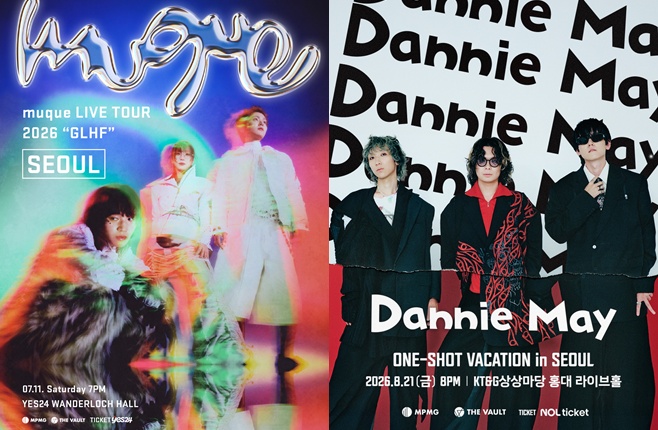
Two trending Japanese bands, Muque and Dannie May, are set to hold their first solo concerts in Seoul this summer, generating excitement among fans across social media platforms. Muque, a four-member band based in Fukuoka, has gained significant popularity, particularly after contributing the ending song 'The 1' to the anime series 'One Piece' in 2025. They are scheduled to perform on July 11 in Seoul as part of their 'Muque Live Tour 2026,' celebrating the release of their second studio album and showcasing their musical evolution.
On the other hand, Dannie May, known for their trio of vocalists, will meet Korean fans for the first time on August 21. Their recent hit 'Incomplete Marriage Theory' reached number one on the Spotify viral charts, solidifying their presence in the industry. The band's eclectic style, merging various genres, has earned them spots in prominent Japanese festivals, further enhancing their reputation.
The upcoming concerts of Muque and Dannie May highlight the rich diversity present within the Japanese music scene. Each band possesses a unique style that broadens their appeal in the Korean market. Notably, Muque's blend of rock, electronic, and pop has resonated well with the MZ generation, reflecting changing musical preferences.
Furthermore, the rise of social media and streaming platforms has created an environment where Japanese artists can rapidly gain recognition beyond borders. Dannie May has adeptly navigated this trend, expanding their musical genre and fostering direct communication with fans. Their live performances serve as an opportunity to connect with audiences and showcase their evolving artistry.
Lastly, these concerts inject new energy into the Korean music ecosystem. As more Japanese artists visit Korea, music fans can expect a richer cultural experience. This trend signifies a positive sign of increased cultural exchange between Korea and Japan, enhancing mutual understanding through music.
This article is KOSTAR’s reinterpretation of a story originally reported by TVDaily.
Photo: MPMG