![[Exclusive] Rich Aki Removed from 'Rap Beat Festival' Lineup Amid Roh Moo-hyun Controversy](https://cdn.kostar.asia/kostar/2026/05/img_6a0d5bf8995eb6.37129729.jpg)
His solo concert scheduled for the 23rd has also been canceled by the venue.
This incident has sparked discussions about freedom of expression and accountability within the hip-hop scene.
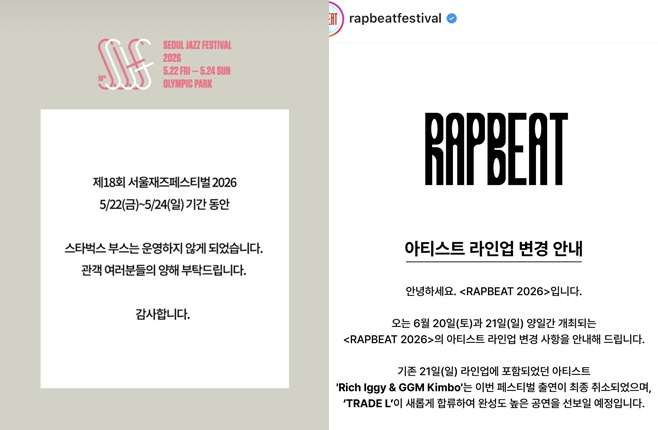
Hip-hop artist Rich Aki (real name Lee Min-seo) has been removed from the lineup of a major hip-hop festival due to recent controversies surrounding the mocking of former President Roh Moo-hyun. The festival organizers announced on their official social media on the 20th that Rich Aki and GGM Kimbo will no longer be performing. This decision appears to have been heavily influenced by the ongoing controversies around Rich Aki.
Following the release of lyrics that caricatured Roh Moo-hyun, Rich Aki faced strong criticism and has been under pressure regarding his performances and potential legal actions. His solo concert scheduled for the 23rd was also canceled by the venue just a day after the backlash intensified. The concert was particularly controversial due to its timing on the anniversary of the former president's death and the symbolic pricing of tickets, which also attracted criticism.
This incident marks a significant turning point for Rich Aki's career. His lyrics directly referenced and belittled the late president, leading not only to his own accountability but also that of artists associated with him. Consequently, this controversy serves as a reminder of the need for careful scrutiny within the hip-hop community regarding issues of freedom of expression.
This incident is unlikely to be merely a fleeting controversy. Rich Aki faces criticism for a lack of sensitivity to social issues, pointing to the necessity for a reevaluation of accountability within the hip-hop scene. The lyrics he presented shocked the public and could lead to broader discussions about the social role of music.
Moreover, this case highlights the need for a verification system and self-regulation within the hip-hop community. Both Palo Alto and Deepflow, who were set to perform alongside Rich Aki, acknowledged their moral responsibilities over their public personas, emphasizing the need to redefine relationships among artists. Such situations demand in-depth discussions about the balance between freedom of expression and accountability.
Ultimately, this incident should prompt a deliberation on how to tackle persistent social issues that exist beneath the surface of Korean hip-hop, urging artists to consider how they connect with society through their music. Rich Aki's case is not just about an artist's transgression but calls for broader discourse on the hip-hop genre itself.
This article is KOSTAR’s reinterpretation of a story originally reported by TVDaily.
Photo: Rap Beat Festival