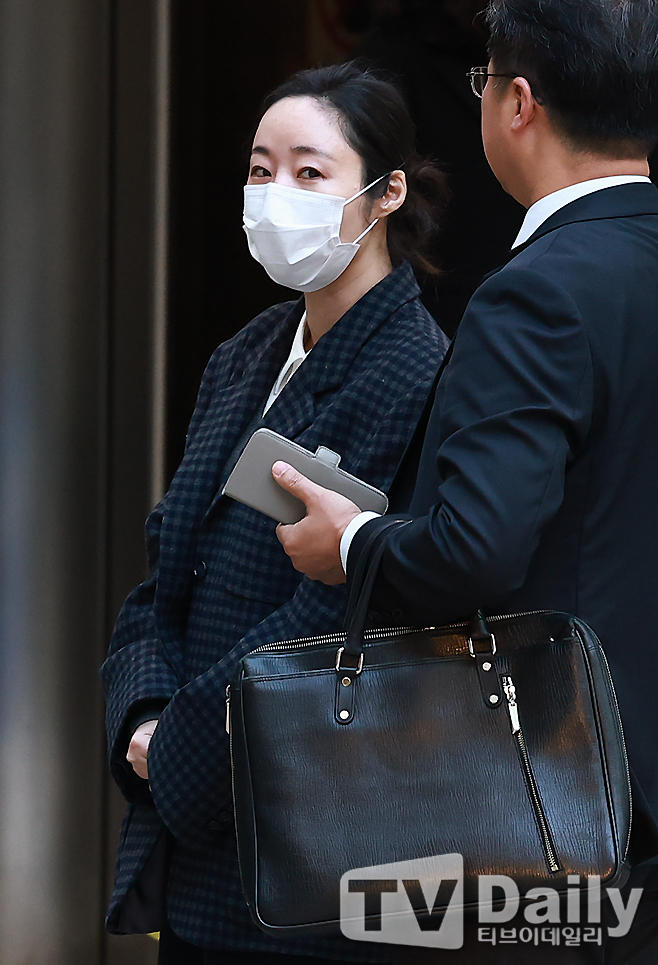

Min Hee-jin's legal victory has shocked the industry.
The industry is calling for improvements in legal frameworks regarding tampering.
[TVDaily Reporter Kim Ji-hyun] In the K-culture industry, where human resources are paramount, the act of tampering itself can have detrimental effects across the entire industry.
On March 3, the Korean Entertainment Management Association (KEMA) expressed concerns regarding former Adore CEO Min Hee-jin's legal victory over Hive's foot option, labeling it a potential threat to the foundation of the industry, and criticizing Min for not providing a clear explanation regarding tampering allegations. KEMA had voiced similar concerns two years ago, yet Min has not responded.
KEMA also emphasized that the conflict between Hive and Min should not be dismissed as merely a personal issue, pointing out that Min's declaration to forego the 25.5 billion won foot option to maintain a positive external image should not leave this matter unresolved. Recently, the court ruled that Hive must pay Min 25.5 billion won for the foot option, causing considerable shock throughout the industry. The evidence Min had presented regarding tampering was rejected by all courts involved.
Subsequent to Min's victory, both the Korean Entertainment Production Association (KEPA) and the Korean Music Content Association (KMCA) argued that attempting tampering could destabilize cultural industries, urging Min to clarify the allegations against her. All three associations aligned their statements on labeling the Hive-Min conflict as a tampering issue, demanding necessary legal frameworks to be established. Given the unique nature of K-pop, where artists are seen as assets, concerns regarding the potential losses stemming from tampering have been increasingly raised.
The K-culture industry places high value on artists and their activities as core assets; hence, tampering issues need to be treated with utmost seriousness. Transparency in management and legal regulations are crucial to bolster the industry’s foundation, instilling trust among K-pop fans. Such incidents can have ripple effects across the entire K-pop ecosystem, highlighting the need for a genuine trust relationship between artists and their fans.
Additionally, the legal regulations that KEMA and other associations demand could contribute to preventing tampering and maintaining the industry’s integrity in the long run. This would help create a safer environment for artists to create and provide a transparent industry structure for fans, yielding positive results. Given its correlation with the globalization of K-culture, a healthy growth of the industry becomes an essential element.
Finally, the demands for Min to clarify the allegations appear to be a necessary step toward restoring trust in the entire industry rather than merely a personal matter. Even if instances of tampering may not be frequent, the symbolic weight of such allegations is substantial. For the sustained development of K-pop, transparent clarification of tampering issues is imperative.
This article is KOSTAR’s reinterpretation of a story originally reported by TVDaily.
Photo: TVDaily